

You’re standing on your doorstep in the biting Leicestershire wind, you turn the key, and then you hear that heart-sinking snap. Half the metal is in your hand, the other half is buried deep inside the barrel, and the door hasn’t budged. It’s a frustrating situation that often happens at the worst possible time, leaving you wondering if a key snapped in lock in Leicester means an expensive evening or a damaged door.
We understand that your first instinct might be worry, particularly if you’re concerned about the potential cost of a full uPVC door replacement or uncertain about local call-out fees. The good news is that a broken key is often a manageable issue that doesn’t require a brand new door. This guide provides the immediate, practical steps you need to take to restore access to your property safely and without causing further damage. You’ll learn how to assess the situation, discover which methods work for extracting fragments, and understand exactly how to regain entry whilst keeping your home secure.
Key Takeaways
- Stop what you are doing immediately to prevent the broken fragment from being pushed deeper into the lock cylinder.
- Assess the situation to determine if a key snapped in lock leicester can be safely removed with household tools or requires expert assistance.
- Understand how metal fatigue and shifting door frames caused by local weather conditions contribute to lock failure.
- Learn about the non-destructive extraction methods that professionals use to regain entry without damaging your door.
- Discover simple maintenance habits and “key checks” that identify wear and tear before a snap occurs.
Snapped Key in Lock? Immediate Steps for Leicester Residents
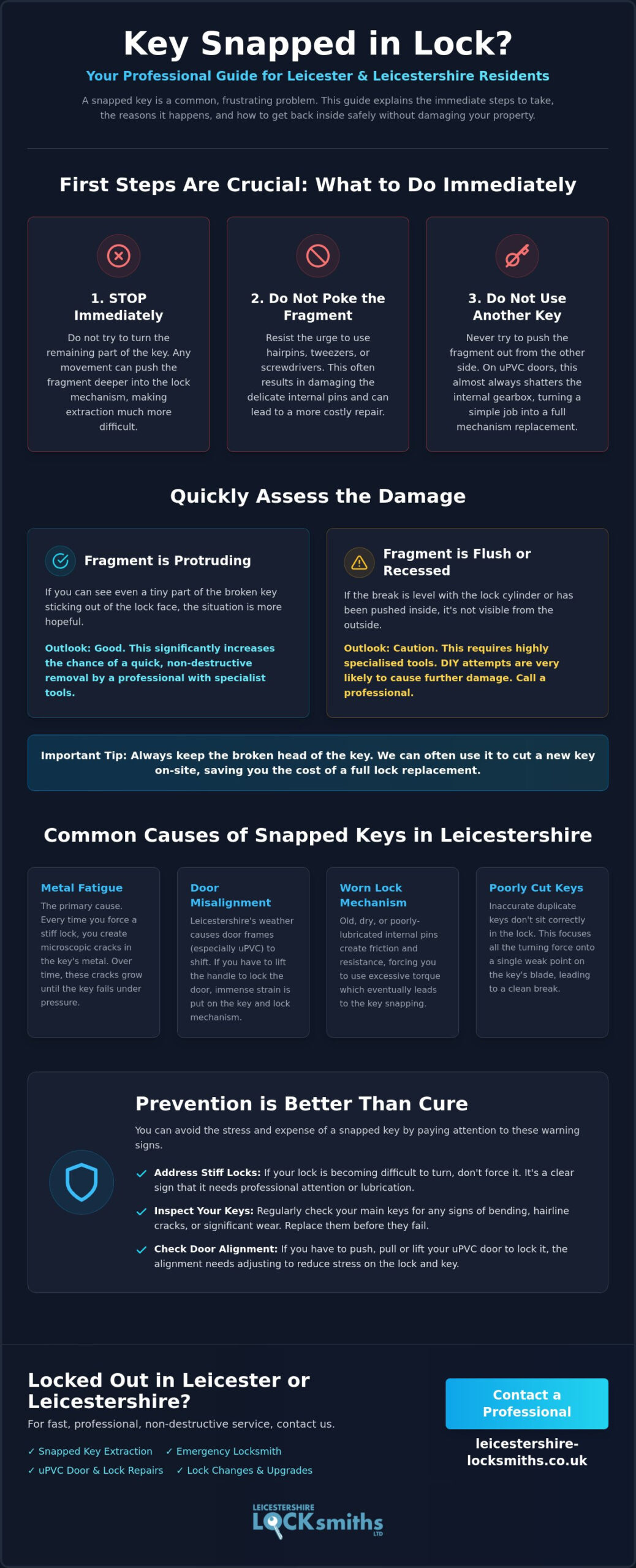
The moment you feel that sickening lack of resistance followed by a metallic ‘ping’, your priorities must change instantly. If you find a key snapped in lock leicester weather can often make the situation feel more urgent, but rushing is your biggest enemy. Stop what you are doing. Don’t try to turn the remaining stump and don’t attempt to force the door open. Most importantly, resist the urge to poke at the fragment with a screwdriver or a hairclip. Every time you touch the broken piece without the right tools, you risk pushing it deeper into the mechanism.
The “Golden Rule” of Key Extraction
The golden rule is simple: less is more. Most modern doors in Leicester use a complex pin tumbler lock mechanism that relies on precise alignment. When a key snaps, the fragment usually sits just behind the first or second set of pins. If you poke it, you risk pushing that metal shard past the point of no return. Panic often leads people to try and use a second key from the other side to “push it through”. On a standard uPVC door, this almost always causes a total failure of the internal gearbox. What could have been a simple extraction suddenly becomes a far more expensive requirement for emergency door opening and hardware replacement. Professional locksmiths aim for non-destructive entry, but that becomes much harder once the internal pins are mangled.
Assessing the Damage: Is it Flush or Protruding?
Before you reach for the phone, take a calm look at the lock face. Is there any metal sticking out? If you can see even 2mm of the broken blade, a professional has a much higher chance of a non-destructive entry. If the break is flush with the cylinder or recessed inside, the task becomes more technical. You should also identify what you’re looking at. Most Leicester homes feature Euro cylinders in uPVC doors, which are particularly sensitive to being “poked”. Older properties might have traditional Mortice locks. Whatever the type, keep the broken head of the key in your pocket. A skilled locksmith can often use the physical profile of that broken piece to cut you a fresh, working key on-site. This simple act of keeping the broken bit can save you the cost of a full lock change if the cylinder itself is still healthy.
Why Keys Snap: From Metal Fatigue to Stiff Leicestershire Locks
A snapped key is rarely a sudden event. It’s usually the final act in a long process of wear and tear that has been happening behind the scenes. When a key snapped in lock leicester residents often assume the metal was simply weak or faulty. In reality, the culprit is almost always metal fatigue. Every time you struggle with a stiff lock, you apply excessive torque to the metal blade. This creates microscopic cracks that grow deeper with every use until the metal finally gives way under the pressure. It isn’t just bad luck; it’s physics.
The local climate plays a significant role in this process. Leicestershire’s damp winters and humid summers cause wooden doors to swell and uPVC frames to shift. These subtle movements put the locking points out of alignment, meaning you have to use more force just to turn the plug. If the internal pins haven’t been lubricated, they provide even more resistance. Using a poorly cut duplicate key only worsens the situation. If the key doesn’t sit perfectly in the centre of the cylinder, the torque isn’t distributed evenly. This focuses all the stress on a single point of the blade, leading to a clean break.
The Warning Signs You Might Have Missed
Many homeowners ignore the early indicators of a failing lock until they’re left with a fragment in their hand. A stiff door lock is the number one precursor to a snapped key. It’s a clear sign that the internal mechanism is fighting against the key. If you find it increasingly difficult to insert or remove your key, consider it a red alert for urgent maintenance. Metal fatigue is the primary reason keys fail under torque, and it’s almost always caused by forcing a lock that isn’t operating smoothly. If your key feels “springy” or starts to show a slight bend, you should consider a professional lock change before the metal fails entirely. A trusted residential locksmith Leicester homeowners rely on can assess whether your existing hardware is still fit for purpose and advise on the most cost-effective course of action before a full snap occurs.
uPVC Alignment Issues in Local Homes
Properties across Leicester, from the Victorian terraces in Stoneygate to newer builds in Hamilton, often face shifting foundations. These movements are enough to throw a uPVC door out of alignment. You’ll know this is happening if you have to “pull” or “lift” the handle with significant force to engage the bolts. This physical strain is transferred directly to the key. Over time, the gearbox and the key take the brunt of this misalignment. If your door requires a struggle to lock, seeking uPVC door repairs Leicester can prevent a total lockout and save you from the frustration of a broken key.
DIY Extraction Methods: What Works and What Destroys Your Lock
When you’re staring at a key snapped in lock leicester weather can make you desperate to get inside quickly. Whilst the temptation to try a DIY fix is strong, most “hacks” you see online do more harm than good. There is a very narrow window where a DIY attempt is sensible, and it depends entirely on how much metal is visible. If the fragment is flush with the lock face, your options for a safe home remedy are almost non-existent.
The only safe starting point is the “Tweezers Test”. If the fragment is loose and protruding, you might successfully pull it out. However, standard eyebrow tweezers usually lack the grip strength required for a snapped blade. Needle-nose pliers are a much better choice, but only if you have at least 2mm of metal to grab onto. If you have to dig into the lock to reach the key, stop immediately. You’ll likely push the fragment further in, making a professional extraction much more difficult and potentially more expensive.
One of the most dangerous myths is the “Superglue Hack”. This involves putting a tiny drop of glue on the snapped head and pressing it against the fragment. In reality, the glue almost always runs into the cylinder. This bonds the internal pins to the fragment and the lock body. What was a simple ten-minute extraction becomes a destructive job that requires drilling out the entire unit. Similarly, don’t waste time with magnets. Most quality keys are made from brass or nickel-plated brass, which are non-magnetic materials. A magnet won’t budge them, but it might mess with any electronic components if you have a smart lock.
The Danger of “Home Hacks”
Improvising with hairpins or safety pins is a recipe for disaster. These thin metal tools often snap themselves or scratch the delicate internal wafers of the cylinder. A scratch on these components can cause the lock to fail even if the key is eventually removed. The cost difference is significant. A professional extraction is a straightforward service, but forcing a DIY fix can lead to you needing a brand new British Standard lock. If the fragment doesn’t move with a gentle pull, admit defeat to avoid escalating your bill.
Safe Lubrication Tips
If the key is stuck but visible, the right lubrication can help. Avoid WD-40 or heavy oils, as these attract grit and grime that eventually seize the mechanism. Instead, use a dry lubricant like graphite powder or a PTFE spray. These allow the fragment to slide out without leaving a sticky residue. When trying to move the piece, use a “pulsing” motion. Gently tap the side of the lock or the door handle to encourage vibrations that might wiggle the metal free. Never force it; if it isn’t sliding, it’s likely jammed against a pin.
How a Professional Leicester Locksmith Extracts Snapped Keys
When you call for help with a key snapped in lock leicester experts arrive with a highly specialised toolkit that goes far beyond what you’ll find in a standard DIY store. The goal is always non-destructive entry, which means removing the fragment whilst leaving the lock cylinder and the door’s internal gearbox completely intact. Professionals use a combination of broken key extractors, spiral extractors, and surgical-grade forceps to resolve the issue. These tools are incredibly thin, allowing them to slide into the narrow keyway alongside the broken blade without causing further obstruction.
Before any extraction begins, a locksmith assesses the “cam” position. If the key snapped whilst you were halfway through a turn, the internal components might be under tension. This traps the fragment firmly against the pins. A professional knows how to manipulate the cylinder back into a neutral state, ensuring the pins are aligned correctly for a smooth extraction. Once the tension is released, the likelihood of a successful, clean removal increases significantly. After the piece is out, the locksmith will perform a thorough health check on the lock to ensure no microscopic metal shavings remain to cause future jams.
The Professional Step-by-Step Process
The extraction process is methodical and precise. First, the locksmith identifies the exact snap point and applies a specialised, non-greasy lubricant to reduce friction. Next, a hook extractor is carefully inserted to bypass the pins and grip one of the key’s teeth. The technician then uses a rhythmic “walking” motion to gradually coax the fragment out of the cylinder. This requires a steady hand and years of experience to avoid snapping the extractor tool itself. Finally, a debris check is conducted using a bright borescope or light to ensure the chamber is entirely clear of metal dust.
Beyond Extraction: Restoring Your Security
Once the fragment is removed, the focus shifts to getting you back to your normal routine. A skilled locksmith can often use the broken pieces to identify the bitting pattern and cut a fresh replacement using a professional code cutter. This is far more accurate than duplicating a worn key. During the visit, the locksmith will also ensure your hardware meets the latest residential locksmith Leicester standards. This usually includes a free security check of your other entry points to ensure your home remains fully protected. If your lock is damaged or outdated, we can provide an immediate professional lock replacement to restore your peace of mind.
Preventing Future Snap-Offs and Upgrading Your Security
Once the immediate stress of a key snapped in lock leicester residents face has been resolved, it’s vital to address the underlying causes to prevent a repeat performance. Hardware doesn’t last forever; if your locks are over a decade old, the internal springs and pins are likely reaching the end of their functional life. A proactive lock change in Leicester properties is often the most sensible move to ensure total reliability. Modern cylinders are far more resilient than older models, designed specifically to handle the high-torque stresses that cause keys to fail over time.
Routine maintenance is your best defence against metal fatigue. We recommend lubricating your external locks at least twice a year, ideally before the onset of winter and again in late spring. This protects the mechanism from the damp Leicestershire climate. Additionally, perform a “Key Check” every few months by holding your most-used keys up to a light source. Look for hairline cracks or slight bends near the shoulder of the blade. If you spot any signs of wear, replace the key immediately before the metal gives way entirely.
Maintenance Checklist for Homeowners
Cleaning your keyways of dust and debris is a simple task that prevents internal grinding. Use a burst of compressed air every few months to clear the chamber of any grit. As we noted in earlier sections, uPVC alignment is critical; if the door has dropped, the stress on the key increases tenfold. Regularly check that your door closes smoothly without needing to force the handle upwards. To stay ahead of metal fatigue, we advise homeowners to replace their primary household keys every 5 years, even if they appear healthy.
Investing in British Standard Hardware
Upgrading to BS3621 locks is often a strict insurance requirement for homes across Leicester. These locks undergo rigorous testing for durability and resistance to common attack methods, including lock snapping. Choosing high-security brands over budget alternatives ensures the metal components are engineered to withstand the torque required for daily use. Investing in professional security upgrades today effectively eliminates the risk of an expensive emergency extraction tomorrow. High-quality British Standard locks offer the long-term peace of mind that your home remains both accessible and secure. To ensure your hardware fully satisfies your insurer’s requirements, our detailed guide on insurance approved locks in Leicester provides a practical checklist to help you audit your existing security and understand exactly which Kitemark standards apply to your door type.
Regain Access and Protect Your Leicester Property
Dealing with a key snapped in lock leicester can feel like a disaster, especially in the cold. However, your first reaction determines whether you face a simple extraction or a costly door repair. By stepping away from the lock and avoiding the temptation of DIY “hacks”, you preserve the delicate internal mechanism for a professional. Our previous sections highlighted how metal fatigue and shifting door frames contribute to these failures, making regular maintenance and “key checks” your best defence against future lockouts.
If you are currently stuck outside, don’t risk damaging your door by forcing the mechanism. Contact Leicestershire Locksmiths Limited now for 24/7 emergency assistance across the county. As non-destructive entry specialists, we prioritise saving your existing hardware whenever possible. Should a replacement be necessary, all our work meets British Standards (BS3621) to ensure your insurance requirements are fully met. We’re committed to providing a transparent, reliable service that gets you back inside safely and without unnecessary fuss. You don’t have to tackle a security crisis alone; expert help is just a phone call away.
Frequently Asked Questions
How much does a locksmith charge to extract a broken key in Leicester?
Locksmith charges for extraction depend on several factors, including the time of day and the complexity of the snap. Standard hourly rates apply during normal business hours, whilst emergency call-outs during the night or weekends typically involve an additional fee. You should always request a clear quote that includes both the call-out charge and the labour for the extraction before the work begins.
Can a locksmith make a new key from the broken pieces?
Yes, a specialist locksmith can usually cut a new key using the broken fragments as a template. By decoding the bitting pattern from both the snapped blade and the head of the key, they can use a professional code cutter to create an accurate replacement. This is a very common service that prevents you from having to replace the entire lock cylinder just because a key failed.
Is it possible to get a snapped key out of a uPVC door myself?
You can only safely attempt a DIY removal if a significant amount of the metal is sticking out of the lock. For a key snapped in lock leicester homeowners often reach for tweezers, but these often lack the grip needed and can push the fragment deeper. If the break is flush with the cylinder face, you’ll need professional extraction tools to avoid damaging the expensive uPVC locking mechanism.
Will I need a new lock if my key snaps inside it?
In most cases, you won’t need a new lock if the extraction is handled correctly by a professional. The goal of a specialist is non-destructive entry, which involves removing the metal fragment without harming the internal pins or wafers. You would only require a lock change if the mechanism was already worn out or if a DIY attempt caused internal damage that prevents the lock from operating. It is also worth checking whether your existing hardware qualifies as insurance approved locks in Leicester, as a replacement presents the ideal opportunity to upgrade to a fully compliant cylinder that satisfies your insurer’s requirements.
How long does it take for a locksmith to remove a snapped key?
A standard extraction usually takes between 15 and 30 minutes once the locksmith has assessed the situation. The time can vary depending on how deep the key has snapped and whether the cylinder is currently under tension. Even complex snaps in high-security anti-snap locks are typically resolved within the hour, allowing you to regain access to your property with minimal delay to your day.
Can I use WD-40 to help get a broken key out?
We don’t recommend using WD-40 inside lock cylinders because it is a solvent-based lubricant that eventually attracts dust and grit. Over time, this creates a sticky residue that can cause the internal pins to seize. It’s much safer to use a dry lubricant, such as graphite powder or a PTFE spray, which helps the broken fragment slide out without compromising the long-term health of the lock mechanism.
Does home insurance cover snapped keys and locksmith call-outs?
Whether you’re covered depends on your specific insurance provider and the level of ‘Home Emergency’ cover you’ve selected. While some basic buildings and contents policies exclude accidental damage to keys, many premium plans or add-ons do cover the cost of emergency locksmith call-outs. It’s important to check your policy wording or speak with your insurer to see if you can claim back the cost of the extraction. For a full breakdown of which security standards your insurer is likely to require, the complete home security reference for residential locksmith Leicester customers covers insurance compliance in detail and can help you understand exactly where your current setup stands.
What should I do if my key snaps in the lock at night in Leicester?
If you find a key snapped in lock leicester residents should immediately contact an emergency locksmith who offers 24-hour coverage. Avoid trying to poke the fragment in the dark with hairpins or screwdrivers, as this almost always causes internal damage. A professional will have the right lighting and tools to extract the piece non-destructively, getting you back into your warm home as quickly as possible.