
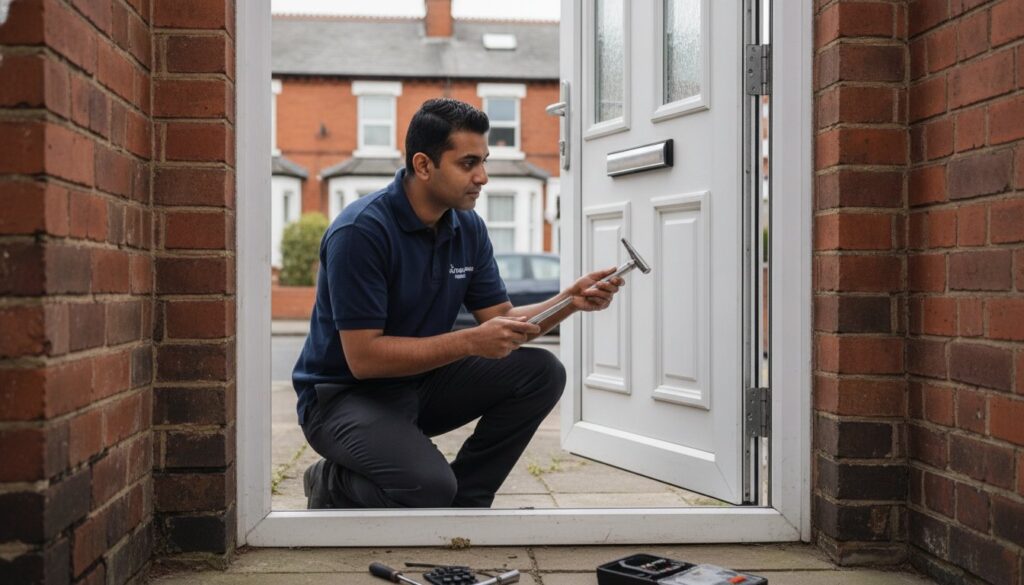
You’re trying to lock up for the night, but the handle feels stiff and the latch simply won’t engage. It’s a frustrating scenario, and if you’re dealing with a uPVC door not closing properly Leicester experts often point to common alignment issues or seasonal expansion as the primary cause. Whether your door is catching on the frame or you’re feeling a cold draft through a new gap, that sense of vulnerability is hard to shake when you can’t easily secure your property.
We understand the anxiety that comes with a door that refuses to behave. In this guide, you’ll discover the common causes behind these issues, from dropped hinges to failing gearboxes, and learn how to spot the warning signs before a minor snag becomes a total lockout. We’ll also explain when it’s best to call a professional Leicester locksmith to handle the repairs, ensuring your door operates smoothly and your home stays secure. You’ll gain a clear understanding of the process so you can get back to your day with complete peace of mind.
Key Takeaways
- Identify how local temperature fluctuations and gravity impact your door’s alignment and operation.
- Master the “Open Door Test” to quickly diagnose whether your issue is a mechanical lock fault or a structural frame problem.
- Discover why a uPVC door not closing properly Leicester homeowners ignore can lead to expensive gearbox failures if left unaddressed.
- Distinguish between simple Allen key adjustments you can perform yourself and complex repairs, like toe and heeling, that require professional expertise.
- Learn the correct lubrication and maintenance routines to extend the lifespan of your multi-point locking system and ensure home security.
Common Reasons Your uPVC Door is Not Closing Properly
If you’ve spent your morning wrestling with a handle just to get out of the house, you’re likely dealing with a uPVC door not closing properly Leicester homeowners often encounter this during seasonal shifts. While these doors are designed for durability, they aren’t immune to the physical stresses of the environment or the passage of time. Understanding why your door is sticking is the first step toward a permanent fix. Most issues aren’t caused by a broken lock, but rather by the door’s physical alignment shifting out of its original position.
The Role of Leicestershire Weather in Door Alignment
Our local climate plays a bigger part in your door’s performance than you might think. South-facing properties in areas like Oadby or Birstall often bear the brunt of the midday sun, which can cause significant material changes. uPVC can expand up to several millimetres in direct sunlight. This expansion can make the door leaf too large for its frame, leading to sticking or a complete refusal to latch correctly. If your door worked perfectly in the depths of winter but suddenly requires force during a summer heatwave, thermal expansion is almost certainly the culprit. It’s a common occurrence in Leicestershire, where temperatures can fluctuate rapidly between morning and afternoon.
Gravity and the “Dropped” uPVC Door
The sheer weight of modern double-glazed units puts immense pressure on the hinge pins every single day. Over time, gravity wins. In busy Leicester households where the back door is in constant use, the hinges can gradually shift or wear down under this load. You’ll usually notice this when the door begins catching on the bottom corner near the handle or the top opposite side. This misalignment doesn’t just make the door hard to close; it also puts unnecessary strain on the common lock mechanisms, which can eventually lead to a snapped key or a jammed gearbox.
Beyond these structural shifts, smaller culprits often hide in plain sight. Small stones, grit, or garden debris can easily lodge themselves in the bottom track, preventing a flush seal. Similarly, old weatherstrips can perish and bunch up over the years. When these rubber seals contract or move out of place, they act as a physical block that prevents the door leaf from sitting correctly in the frame. If you’re struggling to secure your home, professional uPVC door repairs in Leicester can often resolve these issues through simple realignments rather than costly replacements. Keeping the tracks clear and checking the seals can save you from a late-night emergency call-out.
How to Diagnose Your uPVC Door Problem
Before you assume the worst, there are several straightforward ways to pinpoint why you are facing a uPVC door not closing properly Leicester homeowners can often diagnose the root cause with just a few minutes of observation. Identifying whether the issue is mechanical or structural helps you decide if you need a simple adjustment or a more comprehensive repair. By following a logical sequence of checks, you can provide your locksmith with vital information that speeds up the resolution process.
The Open Door Test: Lock vs Alignment
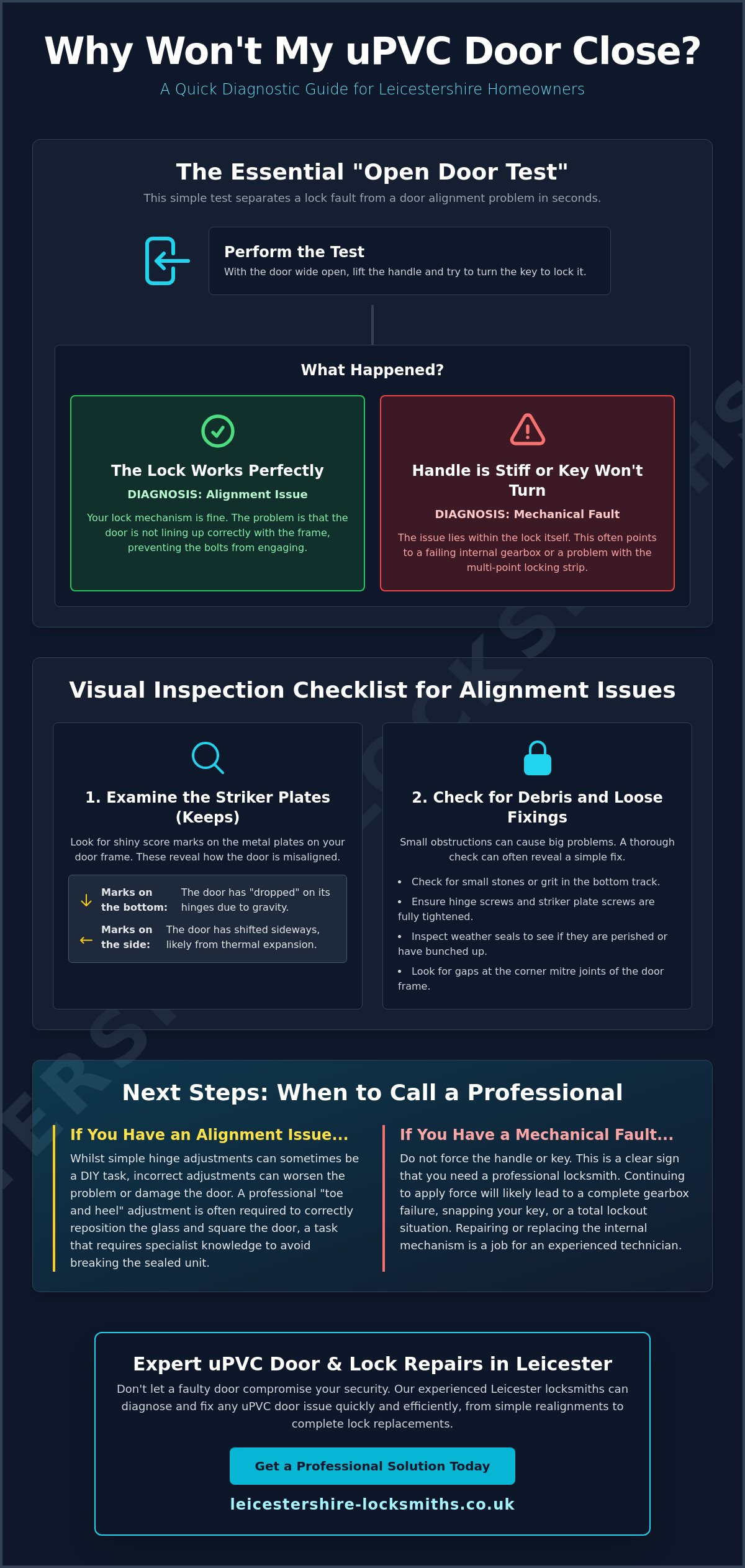
This is the most effective way to separate a lock failure from a frame issue. Open your door fully and attempt to engage the locking mechanism by lifting the handle and turning the key whilst the door is standing open. If the handle lifts easily and the key turns without any resistance, your multi-point locking system is functioning perfectly. In this scenario, the problem is almost certainly an alignment issue where the door leaf no longer sits correctly within the frame. However, if the handle feels gritty, stiff, or “floppy” even when the door is open, the internal gearbox or the locking rail has likely sustained damage and requires professional attention.
Visual Inspection of the Striker Plates
Next, take a close look at the metal strike plates, often called keeps, located on the door frame. These components are designed to catch the rollers and bolts of your locking system. If you notice shiny score marks or small metal shavings at the base of these plates, it’s a clear sign that the locking points are crashing into the metal instead of sliding into their housings. These marks tell a story:
- Marks on the bottom of the keep: The door has dropped on its hinges and needs to be lifted.
- Marks on the side of the keep: The frame or door leaf has shifted laterally, often due to thermal expansion.
- Loose screws: Check if any screws have backed out, as even a slightly protruding screw head can block the path of a roller.
You should also inspect the mitre joints at the corners of the door. If you see visible gaps or the joints appear out of square, the frame itself may be warping. Maintaining the integrity of these components is vital for meeting the Police Preferred Specification for doors, which ensures your home remains a difficult target for intruders. If your diagnostic checks suggest the internal mechanism is under stress, consulting a local security expert can prevent a minor sticking point from becoming a total lockout. A stiff handle is often the final warning sign before a gearbox snaps completely, so acting on these observations early is the best way to avoid an emergency.
DIY Adjustments vs Professional Locksmith Repairs
Deciding whether to grab your toolbox or pick up the phone depends entirely on the symptoms your door is showing. If you’ve identified a uPVC door not closing properly Leicester homeowners should proceed with caution. A simple adjustment can save time, but a heavy-handed approach often leads to a much larger repair bill. It’s a delicate balance between routine maintenance and complex mechanical intervention.
One of the most common mistakes is using the wrong lubrication. Never use WD-40 inside the lock cylinder or on the multi-point rail. Whilst it provides a temporary fix, it acts as a degreaser that eventually attracts dust and grit. This creates a sticky paste that grinds down the internal pins and rollers over time. Instead, opt for a dedicated silicone-based spray or graphite powder to keep the movement smooth. If the mechanism still feels stiff after cleaning the tracks and applying the correct lubricant, the issue is likely structural rather than a simple lack of oil.
Adjusting Flag Hinges Safely
Most modern doors feature flag hinges that allow for movement in three directions: height, lateral, and compression. If your earlier diagnostic checks confirmed an alignment issue, you can try making very minor adjustments yourself. Use a 5mm Allen key to turn the adjustment screws by no more than a quarter-turn at a time. This process requires patience and precision. Over-adjusting a single hinge can put the entire door leaf under immense tension, potentially cracking the uPVC or causing the glass to shift. At Leicestershire Locksmiths Limited, we frequently attend call-outs to fix botched DIY attempts where the door has been pulled completely out of square, making it impossible to lock.
When to Call a Leicester Locksmith
There are certain red flags that indicate DIY is no longer a safe option. If you hear a distinct “crunching” or “clicking” sound when you lift the handle, the internal gearbox is likely failing. Forcing a stiff handle in this situation is the most expensive mistake you can make. It will snap the internal cams, often leaving the door permanently locked and requiring a much more invasive emergency door opening.
Complex procedures like “toe and heeling” also require professional hands. This involves removing the glazing beads and using plastic packers to brace the weight of the heavy glass unit against the frame. It’s the only permanent way to fix a severely dropped door, but the risk of shattering the double-glazed unit is high for an amateur. If you’re struggling to secure your home in areas like Oadby or Wigston, it’s safer to rely on an expert who has the specific tools to restore your security without causing further damage.
Preventing Future uPVC Door Failures
Prevention is always more cost-effective than an emergency repair. Most of the call-outs we attend for a uPVC door not closing properly Leicester homeowners report could have been avoided with a simple ten-minute maintenance routine performed once or twice a year. Whilst uPVC is often marketed as a “fit and forget” material, the complex mechanical hardware inside requires periodic attention to remain reliable and secure. By catching small changes in your door’s behaviour early, you can extend the life of your locking system by years.
The 12-Month Maintenance Checklist
You don’t need specialist tools to keep your door in top condition. Start by clearing any debris from the threshold and the outer frame. Small stones, grit, and even accumulated pet hair can lodge in the bottom track, acting like sandpaper against the rubber seals and preventing the door from sitting flush. Once the tracks are clear, check the security of your door handles. If they feel loose, gently tighten the fixing screws, but be careful not to over-torque them, as this can crush the internal uPVC chambers.
Lubrication is the most vital step in your checklist. Use a high-quality silicone-based spray or a light machine oil on all moving parts, including the hooks, bolts, and rollers along the edge of the door leaf. Avoid thick greases that attract dirt. A quick wipe-down of the rubber weatherstrips with a damp cloth will also prevent them from becoming brittle or sticking to the frame during Leicester’s colder months.
Understanding Multi-Point Lock Health
The “feel” of your door handle is the best diagnostic tool you have. In a healthy system, the handle should be smooth and effortless to lift. If you notice that you’re starting to “jiggle” the handle or apply extra pressure to engage the locks, the internal gearbox is experiencing mechanical fatigue. This is often the result of the door being slightly out of alignment for a long period, forcing the components to work harder than intended.
If your door is more than a decade old, the original hardware may be reaching the end of its natural lifespan. Upgrading to modern, high-quality handles made from salt-tested stainless steel can prevent the common “pitting” and corrosion that plagues cheaper aluminium versions. For older properties, considering security upgrades can also provide better protection against modern burglary techniques whilst ensuring the door operates with modern precision. If your door is starting to show these early warning signs, it’s the perfect time to book a professional service.
Don’t wait for a total mechanical failure to leave your home vulnerable. If your door handle feels stiff or the alignment seems off, contact our experts for a professional uPVC door health check to keep your home secure.
Professional uPVC Door Repairs in Leicester
When you’re faced with a uPVC door not closing properly Leicester residents often find that a single visit from a specialist is all it takes to restore total security. Local expertise is vital because the door types found in Leicestershire’s varied housing stock, from Victorian conversions to modern estates, often use specific hardware configurations. Leicestershire Locksmiths Limited understands these nuances and carries the specialised tools required to realign frames and replace internal components without causing any damage to your existing door leaf.
Our approach is built on transparency and reliability. If your door won’t lock at night, you shouldn’t have to wait until morning to feel safe. We provide a 24/7 emergency response for situations where home security is compromised. Our technicians are trained in non-destructive entry and repair techniques, ensuring that we resolve the mechanical fault without leaving unsightly marks or structural weaknesses. Every part we fit is insurance-approved, meeting the high standards required by UK providers, and we back our workmanship with a comprehensive 12-month guarantee for your peace of mind.
Serving the Whole of Leicestershire
We pride ourselves on our rapid response times across the region. Whether you’re in the heart of Leicester City Centre or in the surrounding suburbs, our mobile units are strategically positioned to reach you quickly. Each van is stocked with 90% of the most common uPVC gearboxes and multi-point locking rails. This high stock level allows us to complete the majority of repairs in a single visit, saving you from the inconvenience of a boarded-up door or a second call-out. We’ve built a reputation amongst local residents for fair, honest pricing, ensuring you know exactly what the job entails before we start work.
Get a Free Quote Today
A sticking door is a warning sign that shouldn’t be ignored. By acting early, you can take advantage of a uPVC door repair service that often saves you the significant expense of a full door replacement. Most alignment issues and gearbox faults are entirely fixable when handled by a professional who knows exactly where to look. We specialise in resolving the specific issues of a uPVC door not closing properly Leicester homes commonly experience, from dropped hinges to failed cams.
If you’re struggling with a stubborn handle or a misaligned frame, call us on 0116 442 2087 for immediate advice and a clear, no-obligation quote. Our team is ready to help you secure your property and restore the smooth operation of your home’s entrances. Contact Leicestershire Locksmiths Limited today for a professional door assessment and let us take the stress out of your home security.
Restore Your Home Security and Peace of Mind
Managing a uPVC door not closing properly Leicester homeowners often find is less about replacing the whole unit and more about timely, professional intervention. Throughout this guide, we’ve highlighted how identifying the difference between a simple dropped hinge and a failing gearbox can prevent a total lockout. By implementing the annual maintenance checklist and monitoring the “feel” of your handle, you can keep your home’s entrances operating with the precision they were designed for.
When adjustments aren’t enough, our non-destructive entry specialists are available for 24/7 emergency response across the county. We provide insurance-approved parts and a 12-month guarantee on all our workmanship, ensuring your security is never a matter of guesswork. Get Your uPVC Door Fixed Today by Leicestershire Locksmiths Limited and enjoy the reliability of a door that locks effortlessly every time. Don’t wait for a mechanical failure to compromise your safety; reach out to your local experts for a permanent solution.
Frequently Asked Questions
Why is my uPVC door suddenly hard to lock?
Sudden difficulty in locking is usually caused by a physical misalignment between the door leaf and the frame. Even a few millimetres of movement can prevent the locking bolts from sliding into their keeps correctly. This is often triggered by seasonal temperature shifts or the door dropping on its hinges over time. If the handle feels resistant, don’t force it, as this can lead to a snapped internal mechanism.
Can I adjust a dropped uPVC door myself?
You can perform minor realignments using an Allen key on the flag hinges to move the door vertically or laterally. This is a practical fix for minor sticking, provided you make very small turns and test the door frequently. However, if the door requires complex “toe and heeling” to brace the glass weight, you should call a professional. Incorrect DIY adjustments can pull the frame out of square and cause permanent damage.
How much does it cost to repair a uPVC door in Leicester?
The cost depends entirely on the nature of the fault, ranging from simple hinge adjustments to more involved gearbox replacements. Minor fixes like handle or seal replacements are generally the most affordable options, whilst mechanical failures require more significant investment in parts. For a uPVC door not closing properly Leicester homeowners should always ask for a clear, no-obligation quote after a professional diagnostic check to ensure transparent pricing.
Why does my door only stick when it is hot outside?
uPVC is a thermoplastic that expands in direct sunlight, sometimes growing by several millimetres during a summer heatwave. This expansion makes the door leaf too large for its frame, leading to catching or sticking. Once the air cools down in the evening, the material usually contracts back to its original size. If this is a recurring problem, a local locksmith can adjust the compression of the hinges to allow for this movement.
Is it better to repair or replace a faulty uPVC door?
Repairing is almost always the better option if the uPVC frame itself is structurally sound. Most common faults, such as failed gearboxes, broken handles, or perished seals, can be resolved by fitting replacement parts at a fraction of the cost of a new door. A full replacement is typically only necessary if the frame has become badly warped, severely cracked, or if you’re upgrading for significantly better thermal performance.
What should I do if my uPVC door handle is floppy?
A floppy handle is a clear warning sign that either the spring cassette or the internal gearbox is failing. If the handle no longer returns to its horizontal position, the internal mechanism has likely lost its tension or a component has snapped. You should have this inspected as soon as possible. Ignoring a floppy handle often leads to a total mechanical failure, which can leave you unable to open or secure your home.
How long does a uPVC door lock repair take?
Most standard repairs, such as realigning hinges or replacing a lock cylinder, can be completed within 30 minutes to two hours. More complex tasks, such as replacing a full multi-point locking rail, may take slightly longer. Because local specialists usually carry a wide range of common gearboxes and parts in their vans, most issues are resolved in a single visit without the need for a return appointment.
Are uPVC door repairs covered by home insurance?
Cover depends on your specific policy and the underlying cause of the damage. Repairs required after an attempted break-in are usually covered, but issues arising from general wear and tear or poor maintenance are typically excluded. It’s best to consult your policy documents or contact your insurer directly. Many insurance companies also require that your door locks meet British Standard BS3621 to ensure your cover remains valid.